What pink noise is
Pink noise has equal energy per octave rather than per frequency, which means the high frequencies are quieter than in white noise. To the ear it is softer and more natural — rain on a roof, wind through trees. Brown noise takes the same idea further, dropping into a deep rumble. The app generates all three so you can slide between them.
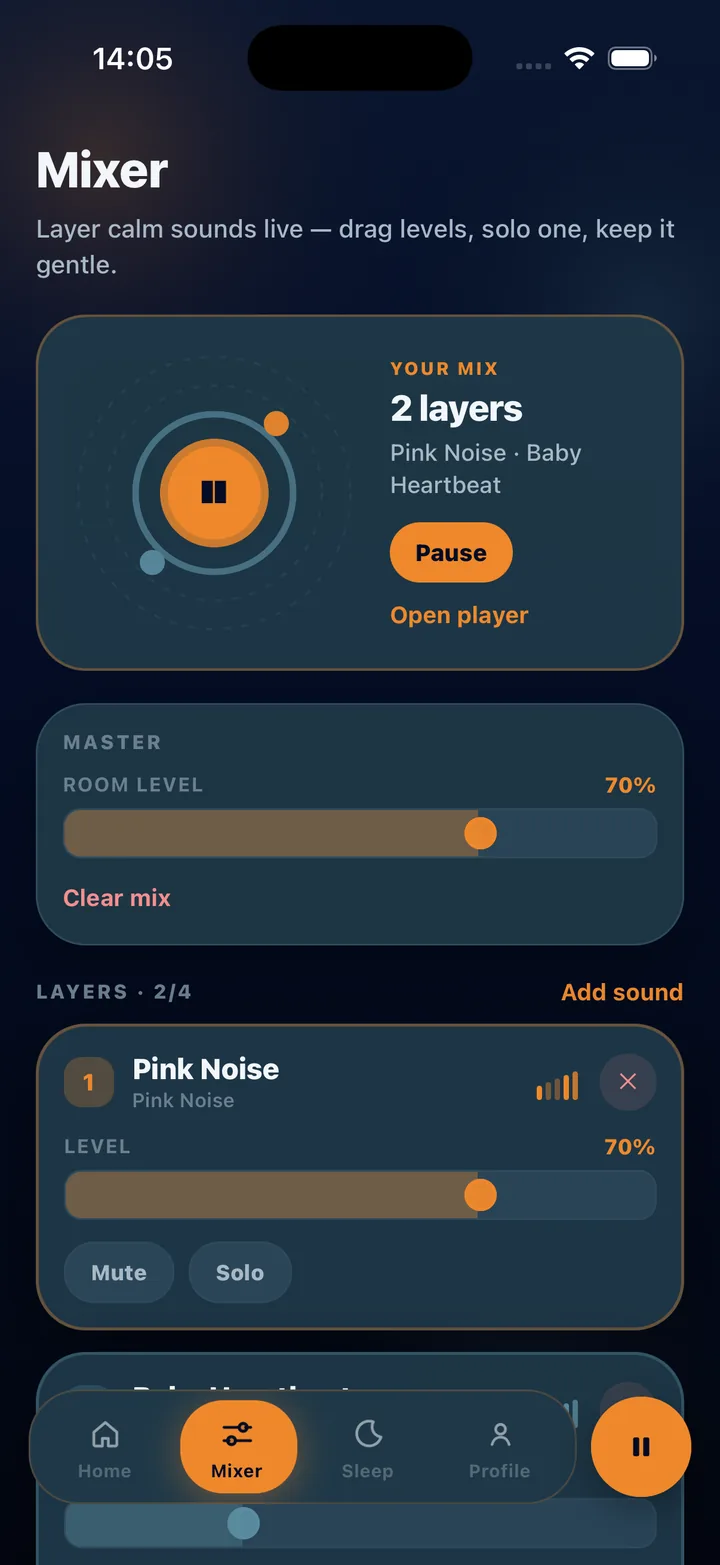
Pink hush is also the base of the app’s Womb Calm mix, sitting under a soft baby heartbeat — a favorite for the newborn weeks.
Pink noise in the mixer
Pink noise works well alone and as a bed for other layers:
- Pink noise alone at a low level for naps
- Pink hush with a soft heartbeat (the Womb Calm mix)
- Pink noise under a lullaby for bedtime
- Pink noise blended with rain for movement without brightness
Find out whether it helps
The one-tap sleep log saves each night and nap with the sound that was playing. After a week the Sleep insights screen shows your average sleep stretch, night wakings and which sound lined up with longer stretches — pink noise versus white, say — grounded in nights you actually tracked, not generic advice.
BabySleep is a sound and tracking tool for parents, not a medical device. Nothing on this page is medical advice; if you are worried about your baby’s sleep or health, talk to a pediatric professional.
Frequently asked questions
Is pink noise safer than white noise for babies?
Neither is inherently safer; volume and distance matter far more than color. The app hard-caps output in the audio engine, and we suggest a moderate level with the phone at least two metres from the crib. Not medical advice.
What is the difference between pink and brown noise?
Brown noise rolls off the highs even more steeply than pink, leaving a deep rumble. Pink sits between white and brown. In the app you can try each within the same session.
Is pink noise free in the app?
Yes — white, pink and brown noise are among the core generated sounds in the free plan.